Automotive Manufacturing North America 2026 Agenda
Registration open
Head over to reception to pick up your badge ahead of the day's content.
Welcome to day two of AMNA 2025
AMS chief content officer Christopher Ludwig opens the main stage and kicks off a full day of discussions on how to make US and North American manufacturing smarter and more digital, collaborative, flexible and more competitive.
[Fireside chat] Stronger collaboration across manufacturing and other functions at Bosch
In this fireside chat with Dr. Hanns Bernd Ketteler, who is responsible for all plants and operations in the Americas for Bosch Mobility, learn how the company is strengthening cross-functional manufacturing, including through simultaneous engineering, agile working and design-for-manufacture strategies.
To stay competitive and avoid waste, automotive manufacturers need to keep up with shortening development cycles, faster time to market and new technology requirements. For a major automotive supplier and manufacturer like Bosch, these factors are becoming even more of a competitive differentiator. That is the company is putting such strong emphasis on increasing this speed through cross-functional collaboration between manufacturing and other departments, including engineering, supply chain, finance, sales and others.
In this special fireside chat with Bosch Mobility’s EVP for operations, Dr Hanns Bernd Ketteler, learn more about how the company is accelerating this collaboration and integration, including technology and processes to enhance ‘simultaneous engineering’, through agile and scrum methodology, and especially through upskilling and training workers.
Key Takeaways:
- How Bosch is increasing speed and reducing development time, including through simultaneous engineering.
- Using data as a differentiator across Bosch Mobility factories and operations.
- Re-using assets and tooling and enhancing predictive maintenance.
- Upskilling workers for smart factory and AI opportunities.
Next-gen production and vehicles with Aptiv
Jose Carlos Jimenez, who leads Aptiv's Connection Systems division, shares how the company is driving forward connected, software-defined vehicles, and supporting production innovation. More details coming soon.
[Panel] Cross-functional optimisation: Technology, collaboration and skills to enhance end-to-end manufacturing
This session explores the tools, process and partnerships that can help integrate engineering, finance and manufacturing to reduce complexity and streamline production and optimise product launches. Leaders will discuss opportunities in digital twins, integrated decision making, design-for-manufacture and logistics, and much more.
OEMs and suppliers are keen to drive out unnecessary waste in production and supply chains whilst shortening development cycles and achieving design and engineering innovations and ultimately meeting customer needs. That means considering manufacturing, automation and supply chain opportunities from early in development cycles, as well as considering key product, sales and finance objectives in parallel to production processes.
This session will explore how automotive manufacturers can best collaborate, integrate and innovate including across design, engineering, manufacturing and logistics. It will include insight on how automakers can create efficient, manufacturable vehicles while fostering innovation, from reducing unnecessary parts, to increasing automation, and ultimately reducing costs and speeding up product and vehicle launches.
Speakers will discuss forward-thinking approaches to production-oriented design, simultaneous engineering, digital tools and manufacturing agility.
Key Takeaways:
- Strategies and targets to reduce product and component complexity and increase production and logistics efficiency.
- Digital tools to enhance collaboration between product, finance, logistics and manufacturing engineering, and to increase manufacturability without stifling innovation.
- Material, automation and supply chain processes that can streamline production and optimise launches.
- Ensuring close partnership and alignment across suppliers.
Aptiv
Nissan Group of the Americas
Bosch Mobility Americas
Chief Content Officer
Automotive Manufacturing Solutions
Coffee Break
[Presentation] Smart automation: Driving efficiency and flexibility at Ford
In this presentation we explore how smart automation and digital tools are shaping the next generation of automotive manufacturing.
Paul Stephens, Global Strategy Manager – Autonomous Robotics at Ford Motor Company, will outline how manufacturers are advancing automation, robotics, and data-driven processes to enhance efficiency, quality, and flexibility. The session sets the stage for wider discussion on practical, scalable applications of smart factory tools across production.
Key Discussion Points:
- How robotics and automation are evolving to deliver efficiency and flexibility in production.
- Where digital tools and AI are showing practical ROI in manufacturing.
- Lessons in preparing today’s plants and teams for tomorrow’s smart factories
[Presentation] Digital Operations: The Future of Manufacturing
Presentation on smart factory digitalisation and automation innovations at Gestamp in the US – details to be confirmed.
[Panel] Smart factory and smarter ROIs: Practical tools for accelerating efficiency, automation and quality
In this session, manufacturing leaders will share practical and actionable processes and technologies with positive impacts across manufacturing and operations, from enhanced data visualisation, computer vision and AI-based solutions for quality checks and errors, smart solutions for material flow and logistics automation, and much more.
Automotive manufacturers are seeking innovations and solutions that reduce waste, increase productivity and eliminate errors, which can be implemented quickly, with clear returns on investment. This session brings together manufacturing leaders and technology experts to share real-world applications of smart factory tools that are driving measurable ROI.
From AI-powered quality inspection and computer vision systems to intelligent logistics automation and advanced data visualisation, automotive manufacturing leaders will share insights into how these technologies are being deployed to streamline operations, reduce errors, and boost throughput. The focus is on practical, scalable solutions that can be implemented across diverse production environments.
Key Takeaways:
- Examples of AI and computer vision in action to enhance quality control and reduce inspection time.
- Strategies to automate material flow, assembly and logistics using smart systems that improve responsiveness and reduce bottlenecks.
- Tools to leverage real-time data visualisation to empower faster decision-making and continuous process improvement.
- Innovations and new technologies to improve tooling, maintenance and production control.
Ford Motor Company
ABB Robotics
Gestamp North America
JR Automation
Editor
Automotive Manufacturing Solutions
Lunch
[Presentation] North American sales and powertrain outlook
Stay ahead of the fast-changing dynamics in US and North American manufacturing with an exclusive analysis and forecast for the future of the region’s automotive manufacturing, including impacts from trade policy, manufacturing localisation and trends in electrification.
This keynote will provide an in-depth look at the evolving US and North American automotive industry. We will share insights on production forecasts, impacts of regulations and trade policy, local-for-local production and trends for electrification. Attendees will gain a clearer understanding of the challenges and opportunities shaping the future.
Key Takeaways:
- Sales and production forecasts for US, Canada and Mexico.
- Manufacturing investment and localisation trends.
- Impacts from changing regulations and trade policy.
- Challenges and trends in the trajectory for EV manufacturing.
[Panel] Smart factory with a human touch: Upskilling, partnerships and enhancing production roles
Smart factories depend on people as much as technology, including matching talent, partnerships and training. This session looks at how manufacturers are attracting and upskilling the right talent and combining people and machines to deliver real results on the shopfloor.
The shift to smarter, more automated production isn’t just about advanced robotics, AI, and digital twins – it’s equally about the people, partners and processes who make these tools work to the benefit of everyone. With so much rapid development in new technology, together with pressure to complete, manufacturers across North America must constantly train and retrain workforces, close critical talent gaps, and create attractive career paths in automotive production and manufacturing engineering.
This panel will bring together automotive OEM, supplier and industry leaders to share how they are tackling these challenges head-on, from rolling out digital skills training and building new career profiles, to redefining shopfloor roles for a data-driven, automated future. Speakers will also explore where humans and automation complement each other, from cobots that ease physical strain and improve ergonomics, to AI-driven insights that empower engineers and operators to make faster, more accurate decisions.
Key Takeaways:
- How digitalisation and automation are reshaping the skills needed in automotive production
- Practical strategies to reskill today’s workforce and develop career pathways fit for the smart factory
- How cobots, AI and data tools can support and enhance operators’ roles
- Lessons from OEMs and suppliers already new strategies to upskill in areas including AI, predictive maintenance, computer vision and more.
Automation Alley
Magna International
BorgWarner
Editor
Automotive Manufacturing Solutions
Coffee Break
Interactive Session: Building a Culture of Continuous Improvement
How can manufacturers sustain operational excellence in an era of constant disruption? This interactive session explores how linking company values and frontline behaviours to structured improvement methods can unlock performance and empower teams.
Continuous improvement doesn’t just happen, it’s built through culture, structure, and mindset. In this interactive session, automotive leaders from General Motors and Stellantis share how they are connecting company behaviours and values with structured improvement frameworks like DMAIC and WCM to drive measurable, lasting results.
Participants will explore how consistent behaviours can serve as a foundation for transformation, even amid AI, automation, and retooling challenges and how to foster self-directed teams that take ownership of change. Through discussion and shared examples, this session will demonstrate how linking values to continuous improvement empowers employees to act proactively, improve quality, and sustain progress across production networks.
Key Takeaways:
- How linking behaviours, values, and improvement methods strengthens culture and performance
- Practical examples of developing self-directed teams that sustain CI across plants and supply chains
- Why structured problem-solving remains vital, even in an era of AI, digitalisation and automation
Interactive Session: Additive manufacturing in a solar vehicle, what can't you use it for
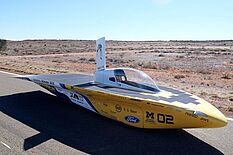
The University of Michigan’s Solar Car Team brings its 2024 national championship vehicle, Astrum, to AMNA as an example of 3D printing applications in manufacturing. Delegates will see the car onsite and join an interactive session in the exhibition area with the student engineers behind it. Systems on the vehicle and tools used in its production will demonstrate the varied applications of additive manufacturing in unique design challenges.
Key Takeaways:
- Demonstrate unique applications of additive manufacturing
- Engineering materials for single-use molds
- Lightweighting and materials innovation for maximum efficiency
- Inspiration from student-driven innovation
[Presentation] AI and robotics in flexible manufacturing
To enable more flexible and scalable production, including across multiple technologies and EV powertrains, General Motors is exploring opportunities in data-driven, AI-enabled and next-generation robotics and automation. One of the carmaker’s leaders in production technology, Miguel Saez, shares more on innovations and opportunities, as well as managing technology implementation and risks, including cyber security.
[Panel] Future Factories: Smarter, integrated and scalable
Step into the factory of the future as experts explore how to implement smarter, automated, competitive and error-free production into serial production, today, including introducing AI and genAI opportunities, as well as upskilling the worksforce.
Learn how to future-proof your factory with the latest innovations that will keep US and North American production growing at scale. Experts will explore current and future technologies, such as digital twins for planning optimal production layouts, using AI and genAI to better manage and reduce errors in production and maintenance, intelligent energy management to reduce costs, material and casting innovation, and opportunities in advanced robotics and humanoids. Discover new ideas and understand how automotive manufacturers are putting the future into serial production today.
Key Takeaways:
- Digital twins as a tool for factory scalability and smart operations
- AI and genAI applications across manufacturing and maintenance
- Advanced automation and robotics, including humanoid potential in production
- The partnerships, talent and ecosystems that will drive US manufacturing forward
Stellantis
BEET
Schaeffler Americas
General Motors
Kistler Group
Chief Content Officer
Automotive Manufacturing Solutions
Smart next steps and reflections
At the close of AMS North America, we recap key takeaways and action points that should follow from the event, with opportunities for participants to align on areas to work together after the conference. AMS will stay in touch with key leaders, report on key developments, and bring lessons learned forward across its future events, publications and livestreams.